Futures Prop Firm Evaluations Explained — Full Guide
A walkthrough of how a futures evaluation works, using Apex Trader Funding as the example, why the trailing drawdown is the rule most traders misunderstand, and the behavioral mistakes that actually fail attempts.
Apex Trader Funding is one of the most popular futures prop firms right now, largely because its evaluation (the "Trading Combine") has no time limit and no daily loss limit, just a single trailing drawdown rule to respect. That sounds simple. In practice, it's the rule most traders misunderstand, and misunderstanding it is the single biggest reason evaluations fail before a trader even gets close to the profit target.
How the Evaluation Works
Apex offers account sizes from $25K to $300K, each with its own profit target and trailing max drawdown threshold. You trade the combine with no minimum number of trading days and no deadline. The only way to fail is to hit the trailing drawdown. Once you hit the profit target with at least the required number of trading days, you move to a funded account with simpler, static drawdown rules.
Trailing Drawdown: The Part Everyone Gets Wrong
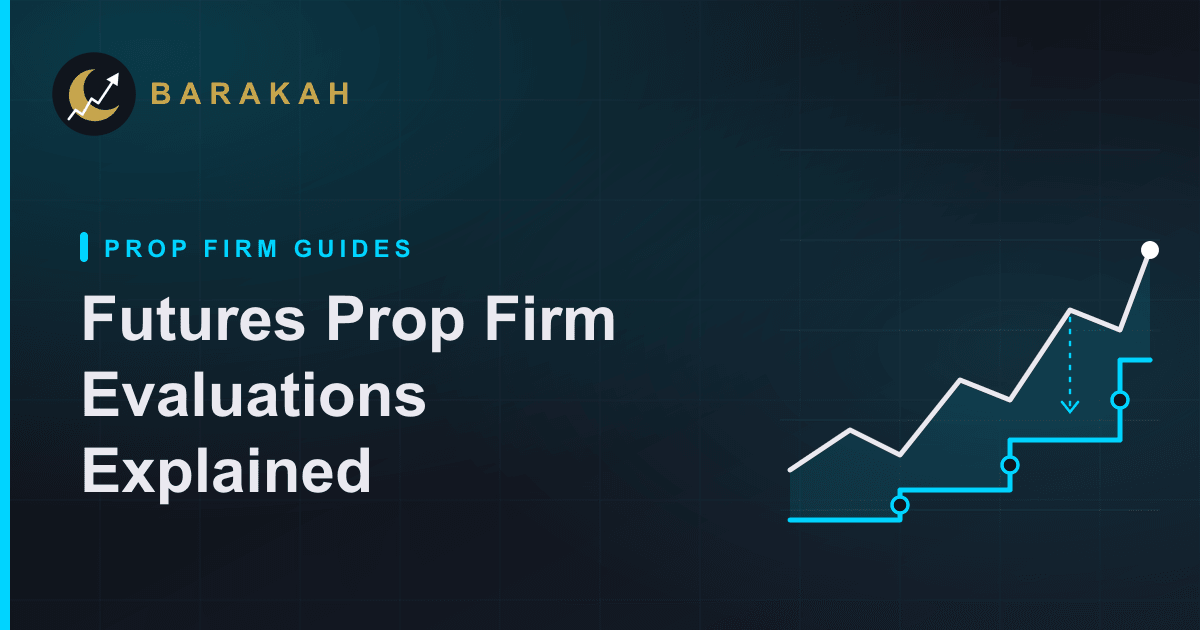
Unlike a static drawdown, Apex's trailing drawdown rises with your account's highest-ever balance (including unrealized gains during the trading day on most account types) until it reaches the starting balance, at which point it locks. That means your "floor" keeps moving up as you're winning. It also means a strong unrealized gain that you don't lock in by closing the trade can still count against you if the market reverses before end of day. For a full breakdown of the mechanic, read trailing drawdown explained.
The Behavioral Pattern That Actually Fails Combines
Having no daily loss limit removes one obvious guardrail, and that's exactly where undisciplined trading creeps in. The patterns that show up most in failed Apex combines:
- Oversizing after an early winning streak. Because there's no daily limit, traders increase size faster than their trailing drawdown cushion can absorb.
- Refusing to stop after reaching the profit target for the day. Holding for "just a bit more" and giving back enough to threaten the trailing floor.
- Revenge trading after the trailing drawdown tightens, trying to "make it back" before the floor locks any further. See how to stop revenge trading.
How to Approach the Combine With Discipline
- Decide your max daily risk before you start, even though Apex doesn't enforce one for you.
- Track your trailing drawdown floor in real time, not just your account balance.
- Set a personal stopping point once you're up on the day and treat it like a hard rule.
- Review every session for the same two patterns above (sizing drift and refusal to stop) before they cost you the combine.
This is exactly the kind of self-imposed discipline that's hard to track by memory alone, especially across multiple days without a deadline pushing you to stay sharp.
How Barakah Closes This Gap
Barakah connects directly to your funded or evaluation account and tracks your trailing drawdown floor in real time, not just your account balance. When your position size jumps right after a strong session (the exact moment a combine is most often lost), the Feedback Center flags it the same day, in a toast or micro-interaction tied to that trading session, instead of surfacing it in a weekly review after the combine is already over.
That's the core of what Barakah's Behavioral Discipline Engine is built to do: it doesn't just total up what happened in the combine, it identifies the exact moment your behavior changed so you can correct course before the trailing floor catches up to you.
The Bottom Line
Apex's no-deadline, no-daily-limit structure is genuinely trader-friendly, but it also removes the external guardrails that force discipline on firms with stricter daily rules. The traders who pass consistently are the ones who build their own daily limits and watch their behavioral patterns as closely as their P&L.
Frequently Asked Questions
What is the most common reason futures evaluations fail?
Misunderstanding the trailing drawdown. Traders track their account balance instead of the moving floor, and fail before they get close to the profit target.
How do I stay disciplined when an evaluation has no daily loss limit?
Set your own. Decide your maximum daily risk before you start, track your trailing drawdown floor in real time, and choose a personal stopping point for days when you are up.
Where should I check the current evaluation rules?
Always confirm the current rules, thresholds and account sizes on the prop firm's own official rules or help center page, since they vary by account and change periodically.